













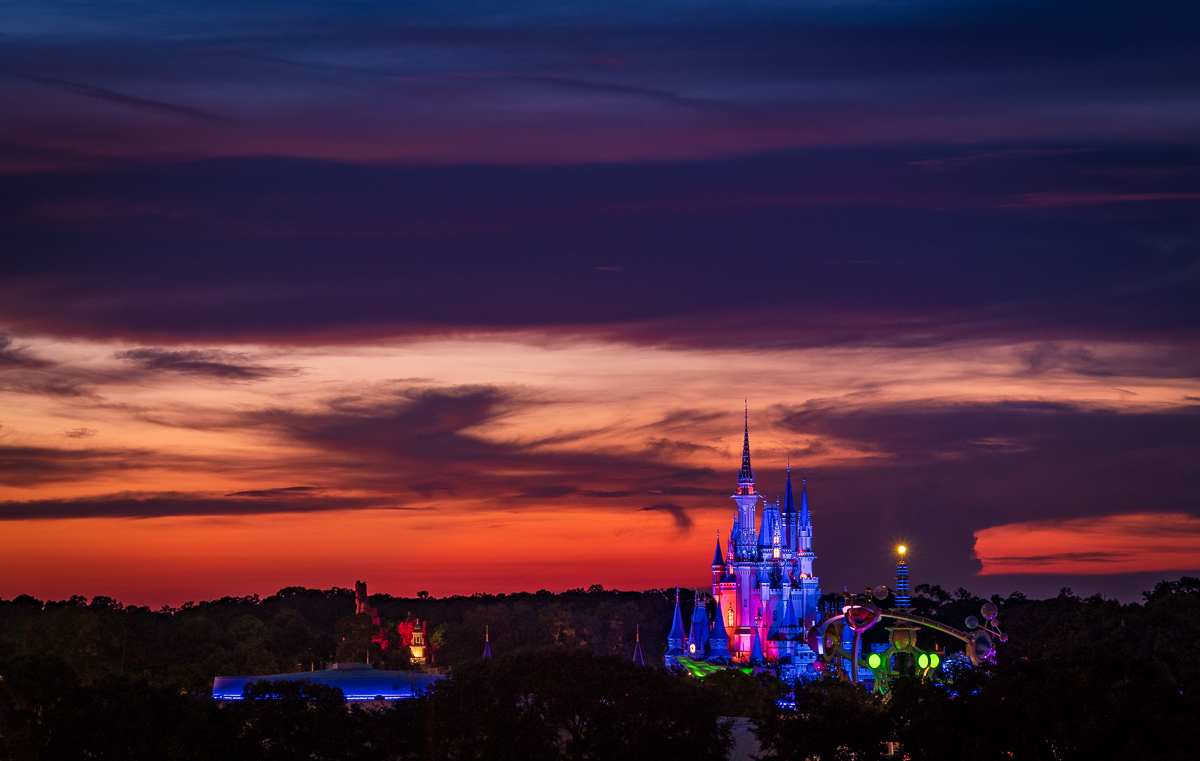
Fans may have a hard time believing this, but Walt Disney World has recorded higher guest satisfaction (GSAT) scores as a result of recent reimaginings of resort rooms and rides in Magic Kingdom. This shares stats about the higher approval ratings, along with commentary about why these improvements should be unsurprising.
During a recent media event at Walt Disney World, we heard a presentation by leadership about how they reinvest in classic experiences, spending hundreds of millions of dollars each year in the parks & resorts. These efforts and expenditures are part of a broad effort to ensure existing experiences receive care to maintain the guest experience.
As part of that presentation, Michael Hundgen, Imagineering Portfolio Executive for Walt Disney World Resort; Sarah Riles, VP of Magic Kingdom; Kelly Byrnes Blakely, VP Resort Operations for Walt Disney World; and the Portfolio Director of Facility Asset Management (FAM) at Walt Disney World all explained how their teams collaborate on planning and logistics to ensure various projects are executed smoothly.
There’s a big team working on this behind the scenes at Walt Disney World. Outside of Imagineering, there are more than 4,000 Cast Members across 15 different trades dedicated to maintaining and refreshing the parks & resorts. These teams work on projects big and small, from carpet and upholstery replacements in theaters to facades on Main Street and more. A lot of their work is in the granular details that most guests never notice, and done overnight so it’s completely out of view.
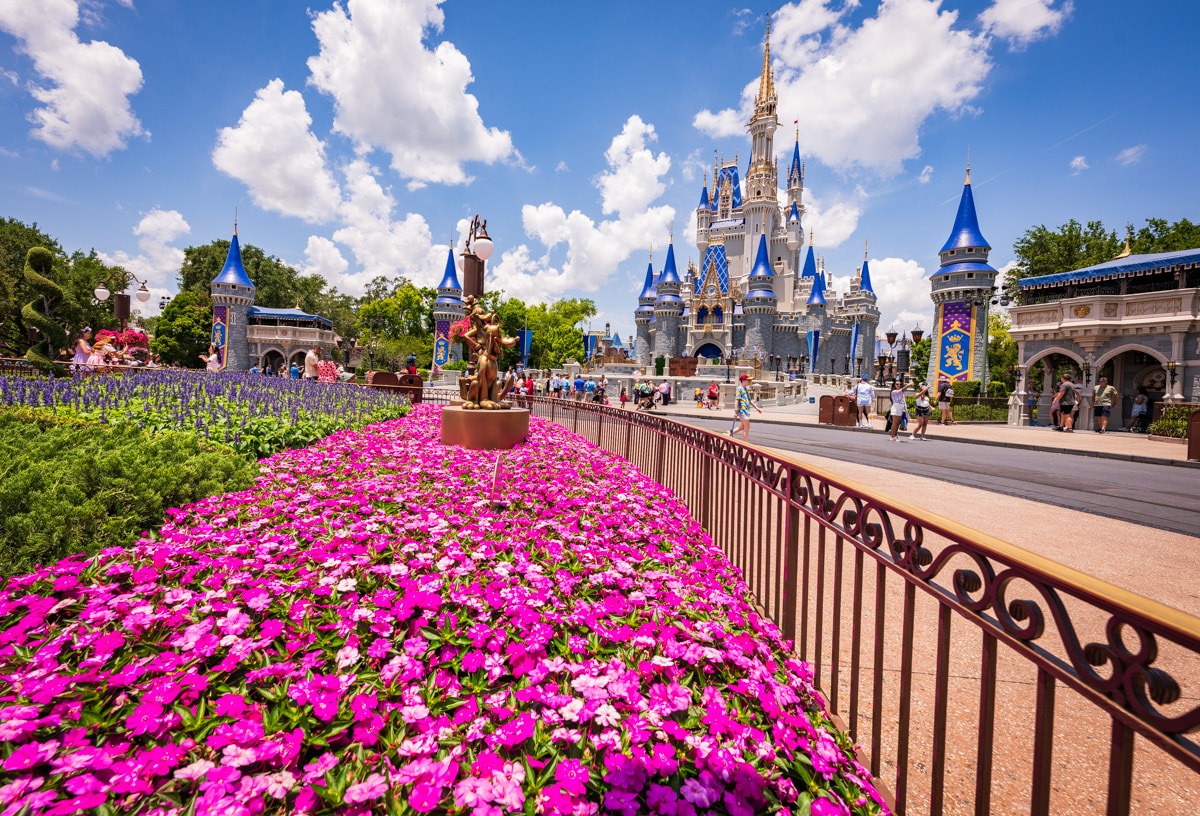
Then there are the bigger and more consequential projects. Although not discussed during the presentation, a prime example of this is the recent Cinderella Castle makeover to remove the princess pink look for the 50th and restore the classic color scheme.
As discussed in How Walt Disney World Executed the Excellent Cinderella Castle Repainting, that project was managed flawlessly. What should’ve been highly visible work was minimally impactful to guests. I really wish they would’ve talked about this, as the project planning and management was superlative, to the point that the cranes were barely visible even during the morning hours.

Examples they actually did discuss included the recently completed updates to Disney’s Pop Century Resort, the ‘recharge’ to Buzz Lightyear’s Space Ranger Spin, track replacement and ‘new magic’ added to Big Thunder Mountain Railroad, upcoming changes to Carousel of Progress as well as the hard goods refurbishment to Disney’s Art of Animation Resort starting in Summer 2027.
Walt Disney World revealed that guest ratings consistently increase after refurbishments to rooms and common areas, going up at least 5 points at Pop Century, Animal Kingdom Lodge, and Port Orleans Riverside. Those were used as illustrative examples, as opposed to a comprehensive list. I’d assume similar gains at French Quarter, Grand Floridian, and a few other recently-redone rooms.

When addressing the resort refurbishments, Disney leadership explained that advance planning is key. Unlike projects carried out in the parks, resort refurbishments have to work around guests who are staying on-property 24 hours a day. That necessitates meticulous pre-planning to minimize the impact and ensure Disney is delivering for current guests during resort stays, not just future ones.
That’s easier at the Value and Moderate Resorts (along with some Deluxes) because there are outlying buildings that can be taken offline one by one to minimize the impact. However, the Pop project also involved the lobby and other common areas at the bustling resort, and that made it trickier.
Editorializing a bit here, the Pop Century refurbishment was carried out in such a way that minimized the guest impact to the greatest degree possible. However, I’d push back on the notion that this is always the case with projects like these.

Several Deluxe Resorts have had fairly intrusive construction projects, and with drawn out timelines. There are currently several multi-year refurbishments, a few of which have received lengthy, seemingly unplanned extensions. Some of this is undoubtedly attributable to deferred maintenance coming out of COVID, but it’s still taking a long time to complete.
There’s also the question of timing on some of these projects. For instance, Walt Disney World chose to take porte cocheres offline during the summer and storm season at the Crescent Lake resorts last year.
This is typically a lower occupancy time, but shifting the arrival area away from the front entrance and not having it covered during the hottest and wettest months of the year was brutal. There have also been seemingly endless projects at the Polynesian, Grand Floridian, as well as Yacht & Beach Club.
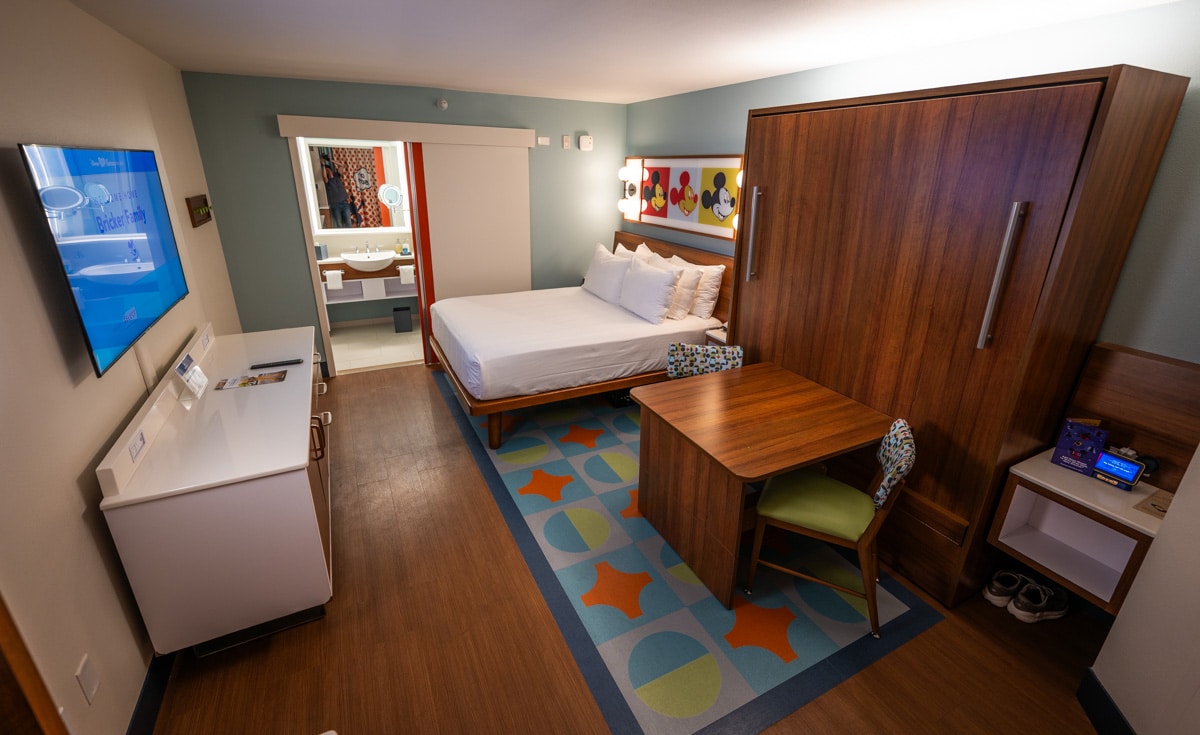
The fruits of these projects, especially the room redesigns, have been well-received by guests. The wave of room reimaginings that started in 2017 with Pop Century and continued with the All Stars was one of the very first ‘modern’ generation of resort room designs at Walt Disney World.
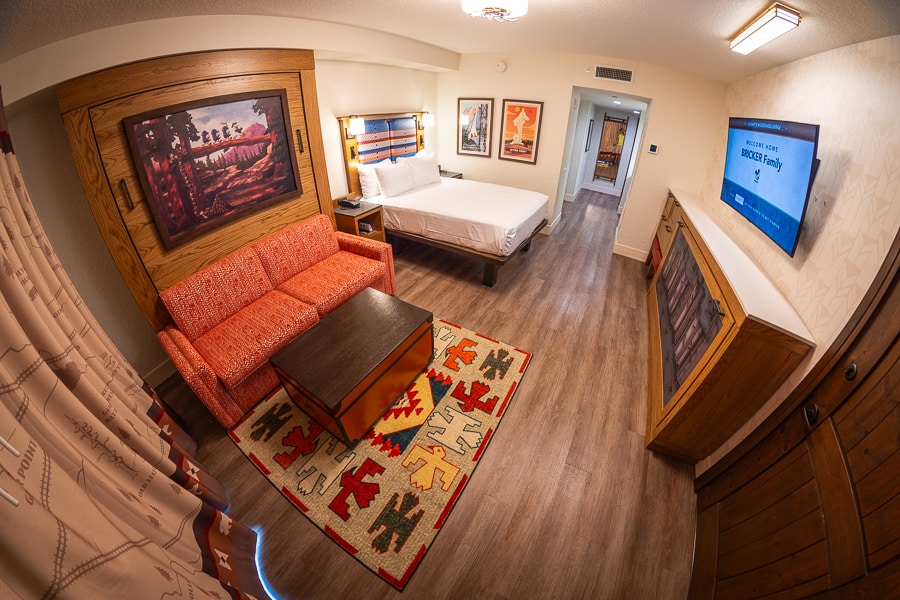
These redone Value Resort rooms offered measurable improvements to make them fresh and functional, with a bunch of clever space-saving design features added. While the footprint remained the same, the resulting rooms feel much larger. There’s added storage, one of the beds folds up into the wall to reveal a table, and much more.
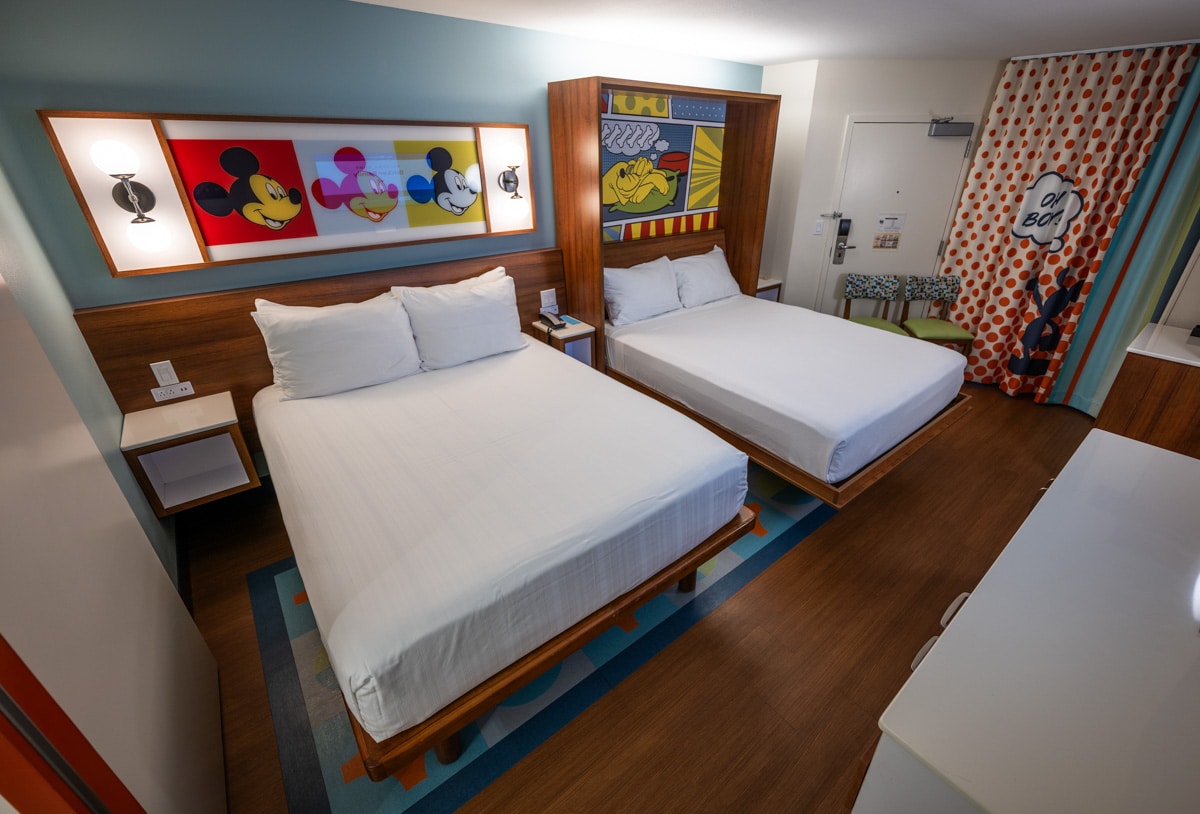
For the most part, the new layout has been uncontroversial with Walt Disney World fans. There’s a reason that all three All Stars adopted the exact same design as Pop Century; it was incredibly well-received among guests. Multiple managers at the Value Resorts have told us that guest feedback has been almost unanimously positive.
Prior to this, Walt Disney World room redos were heading in the wrong direction with overly generic styles and no functional improvements to otherwise justify the bland designs. The one-two punch of the Value Resorts and Yacht Club marked a major course correction and began the turnaround that we’ve seen since.
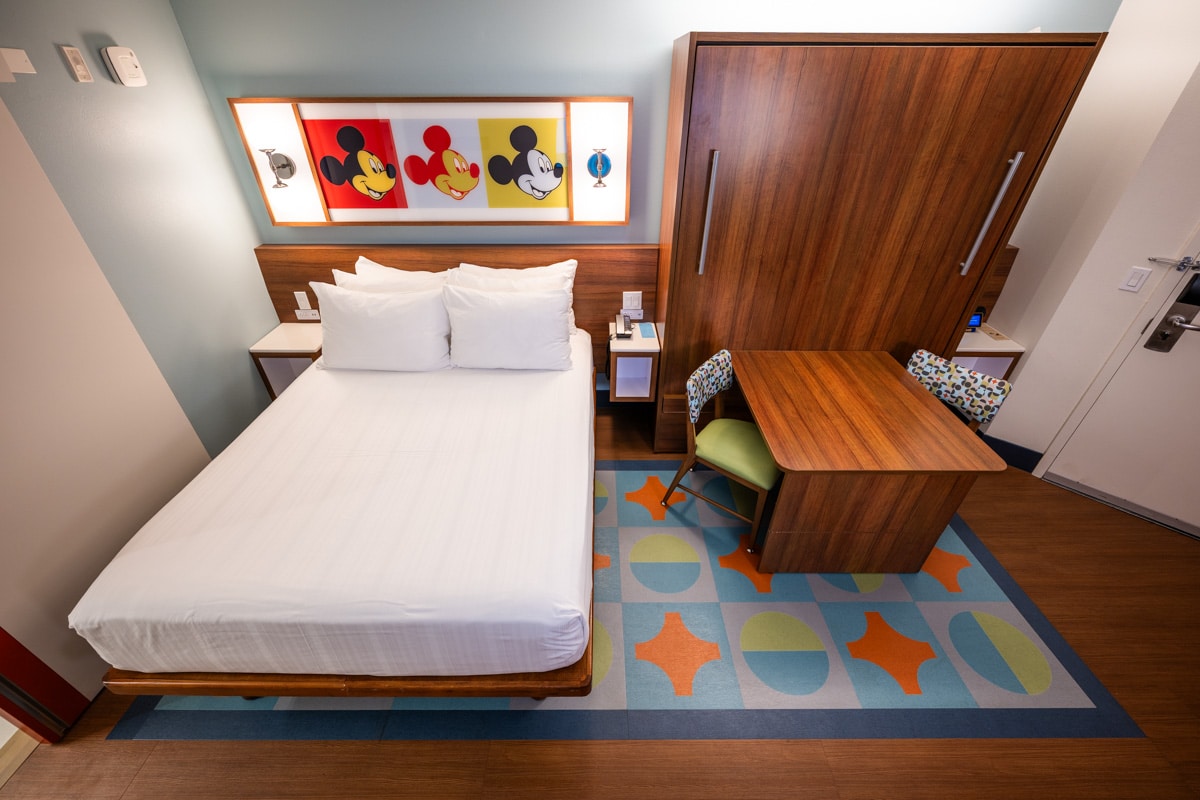
The recent Pop Century refurbishment that wrapped up in 2026 was more iterative in nature, being a soft goods update as opposed to a top-to-bottom overall. That focused on refreshing the rooms, while also addressing guest complaints.
Although the previous rooms had been functionally well-received, many fans lamented the redone Value Resort rooms as bland, boring, sterile, hospital-like, antiseptic, bare, or dystopian. If I had a nickel for every reader who described them that way, I’d have at least $5. Which isn’t a lot of money, but it’s nevertheless a lot of nickels!
Walt Disney World remedied this during the soft goods update at Pop Century. The rooms received colorful curtains, more pop art, new flooring with a colorful pattern, and a refresh coat of blue paint on an accent wall. All minor changes, but aimed precisely at a problem guests had identified.

It was a similar story with last year’s soft goods refurbishment at Yacht Club. The big change here was the addition of a rug under the beds, along with new art, furnishings, and pops of navy blue, reds, and whites to contrast with the beiges that caused many guests to complain of the rooms being drab and dreary. In our review of the new rooms at Disney’s Yacht Club Resort, we summed them up as offering “more color, more Disney, more detail.”
This isn’t to say that all of the recently redone rooms have been flawless. Elsewhere around Crescent Lake, the rooms at both BoardWalk and Beach Club have been recently redone. Both of these feel underdone, with specific little missing details that would elevate them considerably. Frankly, it’s almost as if the subsequent soft goods refurbishment at the Yacht Club is an “answer” to what’s missing from those rooms (it was third of the trio).
The refresh of Disney’s Contemporary Resort back before Walt Disney World’s 50th Anniversary still perplexes me. The lobby level and Steakhouse 71 were redone brilliantly, but the A-frame rooms featuring the Incredibles IP injection look tacky and cheap. On a positive note, even at the Contemporary, Disney iterated on the new rooms before moving on to the Garden Wing. The result is that those offer a few improvements. They’re still not good, but they’re not as bad.

DVC Room Redesigns
Similar sentiment has been shared during the annual Disney Vacation Club Condominium Association Meetings in recent years. During those, DVC leadership has directly pointed to the room updates as a driver of member satisfaction.
The wave of rooms with Inova pull-down beds has been a colossal upgrade over the pull-out couches, and a huge hit with DVC members. It has been one of several functional improvements that have added to the ‘quality of life’ of redone rooms, while Imagineering has also done a solid job weaving themed design into the upgraded units.
At one condo association meeting, DVC indicated that guest satisfaction scores have increased by 20% among guests who have stayed in redone rooms at Saratoga Springs. It’s a similar story with the Marvelous Mary Blair Inspired Rooms at Bay Lake Tower, which Walt Disney World recently confirmed to us have seen their ratings increase by 19 or 20 points. And honestly, an increase of “only” around 20 points seems low based on our impressions of the before vs. after of those new rooms. It’s a night and day difference.
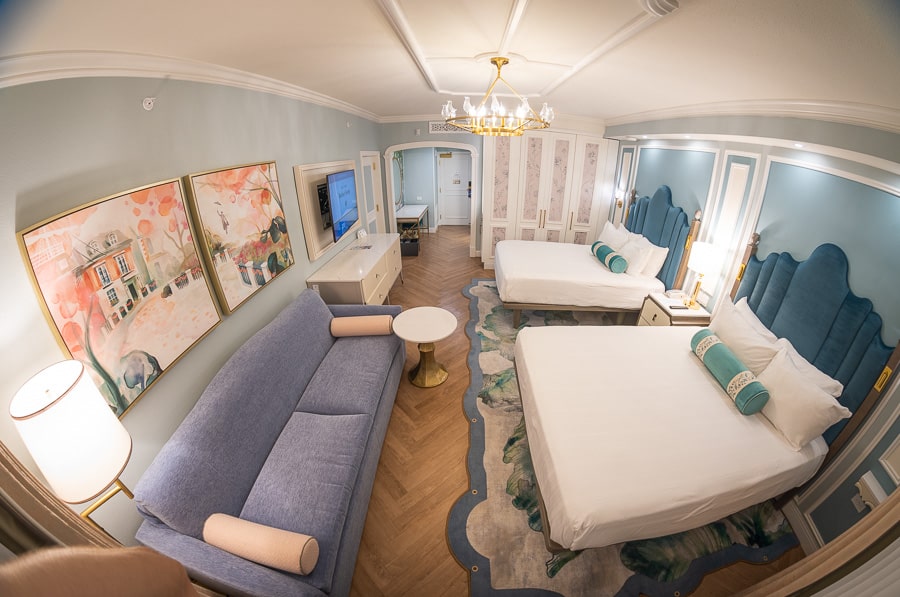
These new room features first debuted at Disney’s Riviera Resort, and have been added to every single redone DVC room since. (The only possible exception to that might end up being Old Key West, which is due to layout.) Now you know why!
For all of my complaints about Disney’s Riviera Resort, the guest rooms were never among those. These guest rooms do a great job of balancing modern luxury, themed design, and functionality. Achieving this trifecta is exceedingly difficult, and an area where Disney struggled pre-Riviera.
Post-Riviera, Walt Disney World has been mostly crushing it with room reimaginings. On the DVC side, we recently stayed in the biggest misfire (stay tuned for more on this soon), but leadership listened to guest feedback and has already scheduled another refurbishment to address the bungled one last year. For the most part, the current wave of room redesigns do a good job of marrying space-saving styles with well-themed ones. If Disney iterates on that further with more color and detail in upcoming soft goods refurbishments, it’ll be a big win.
First-Timers vs. Fan-Favorites
Whenever we share looks at new rooms, fan and reader reactions are admittedly much more mixed. That’s understandable. Style is a matter of personal preference and tastes, and there’s never going to be complete consensus.
Nevertheless, it’s difficult not to wonder the degree to which nostalgia and sentimentality colors opinions. We get this, and have fondness and memories around a lot of little things at Walt Disney World. I love a lot of “unpopular” offerings, and dislike other changes that have been well-received.
Generally speaking, there are differences between the preferences of Walt Disney World fans and casual guests. It’s easy to see this in what’s beloved by fans but decidedly less-so with the general public. Resorts contain several such illustrative examples.

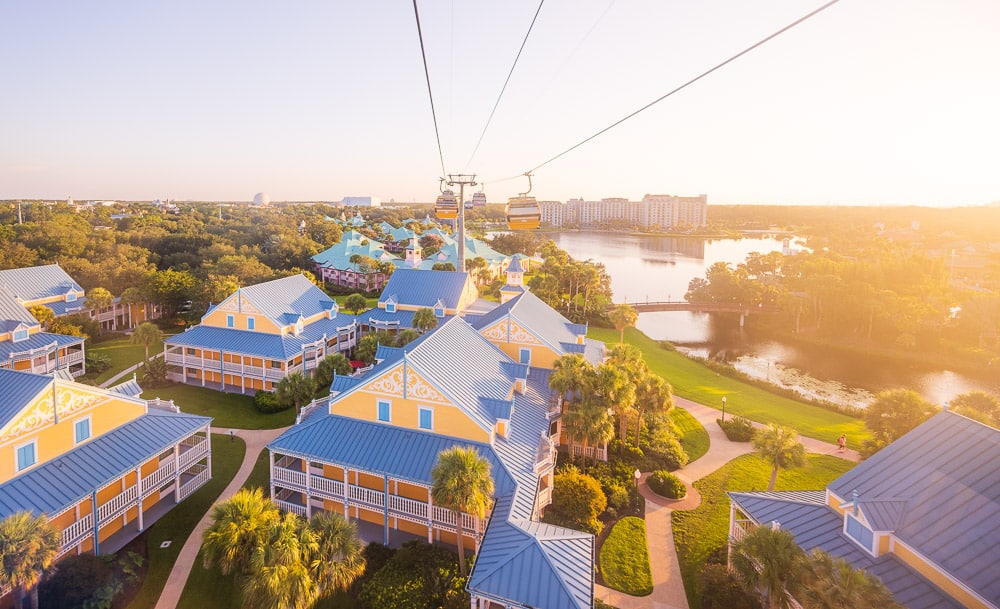
One easy example is resort layouts. I love the sprawling styles of Port Orleans, Caribbean Beach, Coronado Springs, etc. There are few things I enjoy more than wandering, exploring, and soaking up atmosphere. This ‘blessing of size’ is so uncommon at real world hotels, and is a unique asset to WDW resorts.
Wrong as they might be, regular guests vehemently disagree with me. Their size is one of the most common complaints about these resorts, and has negatively impacted satisfaction scores and the likelihood of revisiting or recommending a particular property. It’s a big factor in Disney’s decision to build more condensed, tower-style hotels.
The same is true in guest rooms. Diehard Walt Disney World fans love thoroughly-themed rooms, with many favoring a ‘more is more’ stylistic philosophy. Many of us want to see transportive themes executed in clever ways; resorts that take us to another time and place are beloved.
By contrast, a majority of casual visitors crave characters, convenience, and/or luxury. They want the high prices of resort rooms to be apparent via fresh designs and well-appointed accommodations. To many of them, “distinctly Disney” means intellectual property, not a transportive theme.
There are ways to thread the needle on these tensions, and I’d argue that’s precisely what Walt Disney World has done with a lot of the new rooms. Beyond the superlative DVC resorts (which are their own distinct thing with different demographics), prime examples that come to mind for me are Animal Kingdom Lodge, Grand Floridian, and the Under the Sea rooms at Caribbean Beach (one of our personal favorites), among others.
The upcoming Little Mermaid Rooms at Disney’s Art of Animation Resort have the potential to do this. Even as a diehard fan, my take is that these rooms currently look like cheap and feature Party City caliber decorations that barely qualify as themed design. Upgrading these by using Pop Century plus the Under the Sea rooms as a template should be like shooting fish in a barrel. Accordingly, I was quite surprised by the backlash to this news on social media.
Buzz Lightyear’s Big Recharge
Switching gears, Walt Disney World leadership also shared how their ‘singles and doubles’ approach to ride refurbishments and attraction enhancements has improved guest satisfaction.
At least with the projects that have debuted in 2026, it seems like there’s broad consensus among fans, first-timers, and the company itself. This is something we’ve already covered at length in Walt Disney World’s Newly Reimagined Rides Are All Upgrades, so we won’t fixate on it too much.
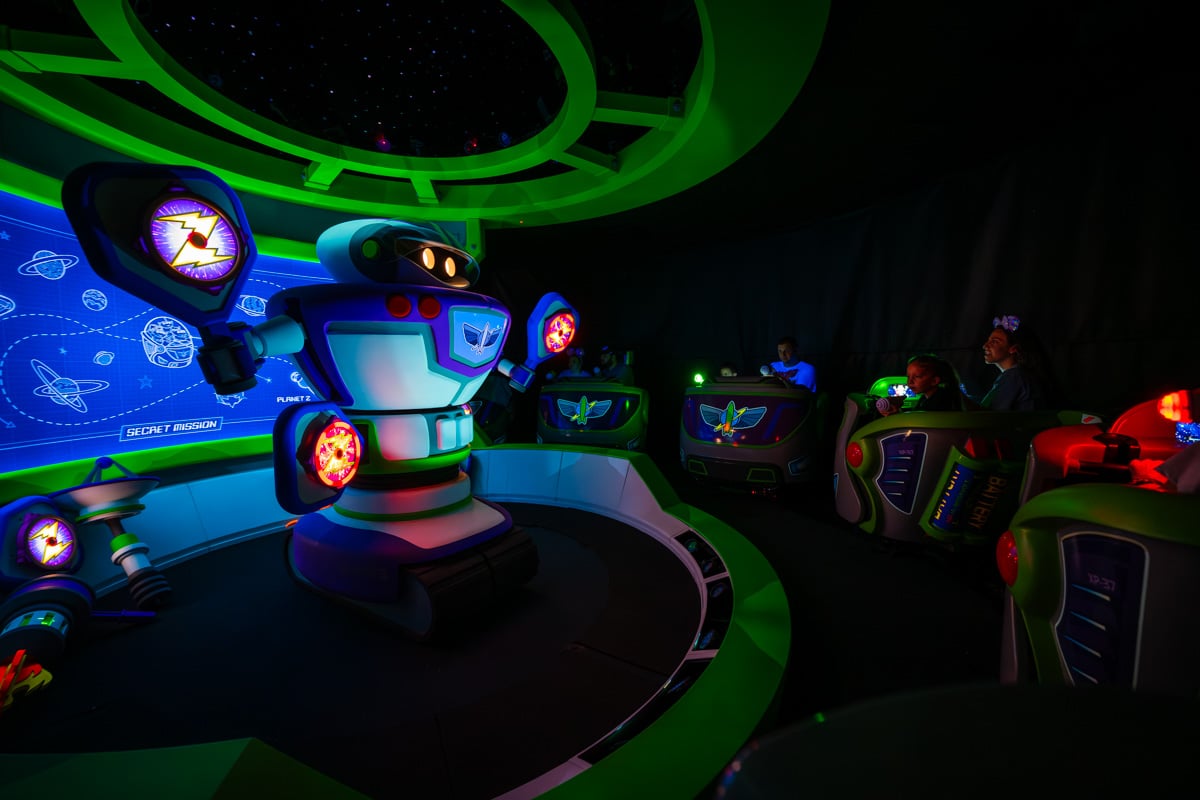
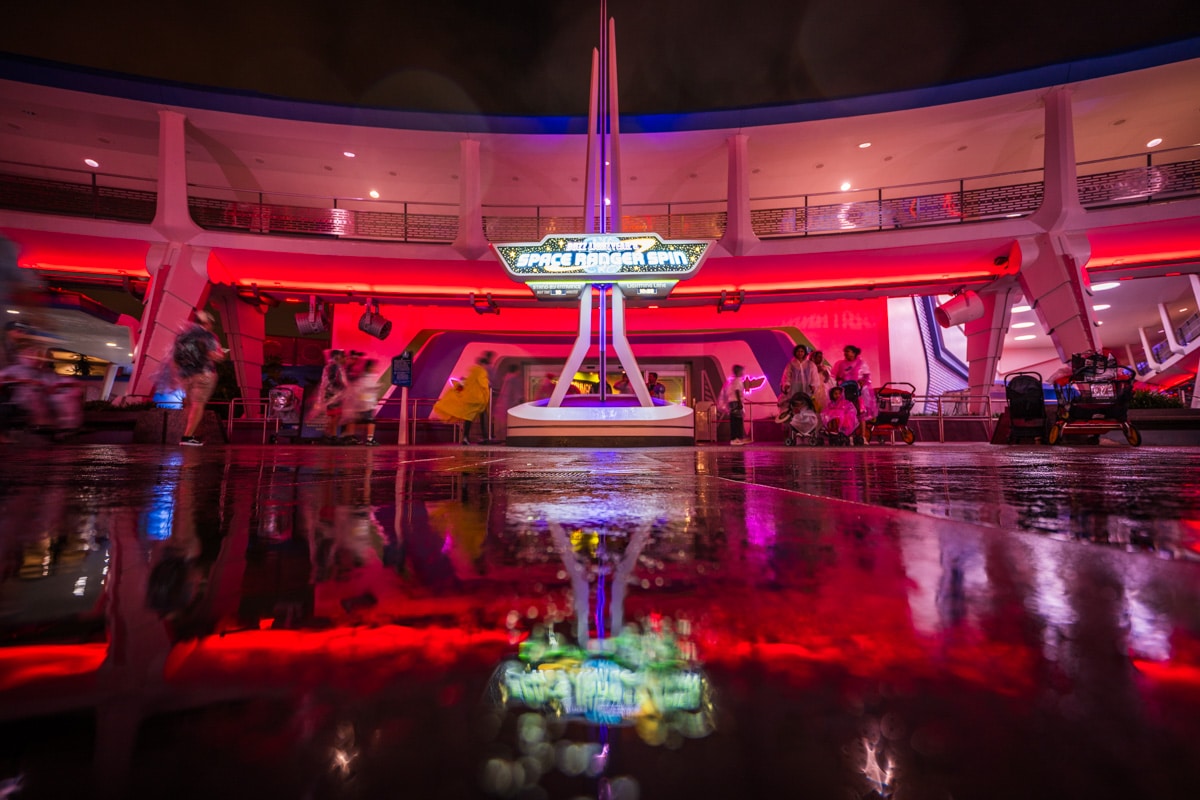
One specific success story is the recharged Buzz Lightyear’s Space Ranger Spin. When surveyed, guests describe the attraction as “much improved” and “modernized,” with the upgrades accounting for a lift in overall guest satisfaction scores. The percentage of guests who give Buzz Lightyear’s Space Ranger Spin the highest rating of “excellent” has gone up 15 points compared to pre-refurbishment.
They also pointed to Big Thunder as a big success story, albeit without any specific data points. They were particularly pleased with the engineering team’s ability to increase the iconic ride’s reliability, while also making it a more comfortable experience that more guests can enjoy by virtue of the lowered height requirement. Big Thunder was also presented as an illustrative example of the collaborative relationship between FAM and Imagineering, explaining that the partnership enabled them to successfully accomplish projects like this.

Country Bears Case Study
Speaking of Frontierland reimaginings, Disney previously shared an update on Country Bear Musical Jamboree’s guest satisfaction ranking. While I doubt many fans will dispute that Buzz or Big Thunder are better, this one is a bit more contentious among the diehards.
When first announcing the Buzz Lightyear’s Space Ranger Spin refresh, leadership actually pointed to Country Bear Musical Jamboree as the template, of sorts, and what empowered them to continue their ‘singles and doubles’ strategy. At the time, Michael Hundgen explained updates to classic attractions: “This is us going back and saying, ‘You know what? This experience needs some love. It’s the OG.”
Hundgen said that there were “lots of opinions about what to do” with Country Bear Jamboree, wryly hinting at the rumored proposals for the attraction from the Chapek era. “Fans love the bears, we love the bears,” Hundgen added. He explained that Imagineering wanted to make the show fresh and relevant, while also showing love to the Country Bears.
The presentation revealed that Walt Disney World and Imagineering consider the reimagined stage show a “big success.” Guest Satisfaction surveys rank Country Bear Musical Jamboree as the #6 overall attraction in Magic Kingdom. The original Country Bear Jamboree was ranked #27.

This is a good example of the ‘tension’ between diehard Walt Disney World fans and first-timers or casual guests.
As much as I’d like to believe otherwise, it’s no shock that the original Country Bear Jamboree ranked so low. It was a stage show (strike one) from the 1970s (strike two) without any connections to recognizable intellectual property (strike three). It also featured sharp wit and wry humor that most guests either wouldn’t appreciate or might find offensive (strikes four-plus).
I loved Country Bear Jamboree, but recognize that not everyone is me. No amount of awareness or advocacy for the OG Country Bears is going to persaude people of my perspective. Even though I don’t like the idea of dumbing things down for modern sensibilities, I’m also a realist. You have to meet the audience where they are, at least to some extent.
It’s a delicate balance, and one that I believe they’ve struck with Country Bear Musical Jamboree. Diehards (like me) get to see the bears as opposed to yet another show based on Toy Story or whatever, while casual audiences and younger generations (like my daughter) get something that resonates more with them.
Ultimately, it’s tricky for Walt Disney World to appease both the nostalgic and dedicated fanbase as well as the first-timers, as our preferences are often at odds. I do think Disney has gotten better at threading this needle recently, and the almost unequivocally positive feedback to the Bay Lake Tower rooms are a good illustration of catering to both tastes. Those feel nicer to casual guests, with a Mary Blair-inspired design sensibility aimed squarely at us.
Not every project is perfect; all have their faults. But with only a few exceptions, most are course-corrections and steps in the right direction. This summer’s slate, for instance, feels squarely aimed at fans. Even before that, there are things we had given up hope in ever seeing, like a new night parade in Magic Kingdom, whereas others are the type of investment we never expected from Walt Disney World, such as the upgraded Frozen Audio-Animatronics. Here’s hoping that, alongside the blockbuster new expansion projects aimed at attracting new first-timers, Walt Disney World continues the ‘singles and doubles’ approach to enhancements aimed squarely at diehard fans. What they’re doing is working.
Planning a Walt Disney World trip? Learn about hotels on our Walt Disney World Hotels Reviews page. For where to eat, read our Walt Disney World Restaurant Reviews. To save money on tickets or determine which type to buy, read our Tips for Saving Money on Walt Disney World Tickets post. Our What to Pack for Disney Trips post takes a unique look at clever items to take. For what to do and when to do it, our Walt Disney World Ride Guides will help. For comprehensive advice, the best place to start is our Walt Disney World Trip Planning Guide for everything you need to know!
Your Thoughts
What do you think of Walt Disney World’s recent ‘singles and doubles’ approach to reinvesting in classic attractions? What about the room reimaginings and refurbishments post-Riviera? Surprised by the GSAT improvements, or are they what you’d expect if you’ve experienced the rooms or rides before and after? Do you agree or disagree with our assessments? Any questions we can help you answer? Hearing your feedback—even when you disagree with us—is both interesting to us and helpful to other readers, so please share your thoughts below in the comments!